Physical Address
304 North Cardinal St.
Dorchester Center, MA 02124
Physical Address
304 North Cardinal St.
Dorchester Center, MA 02124

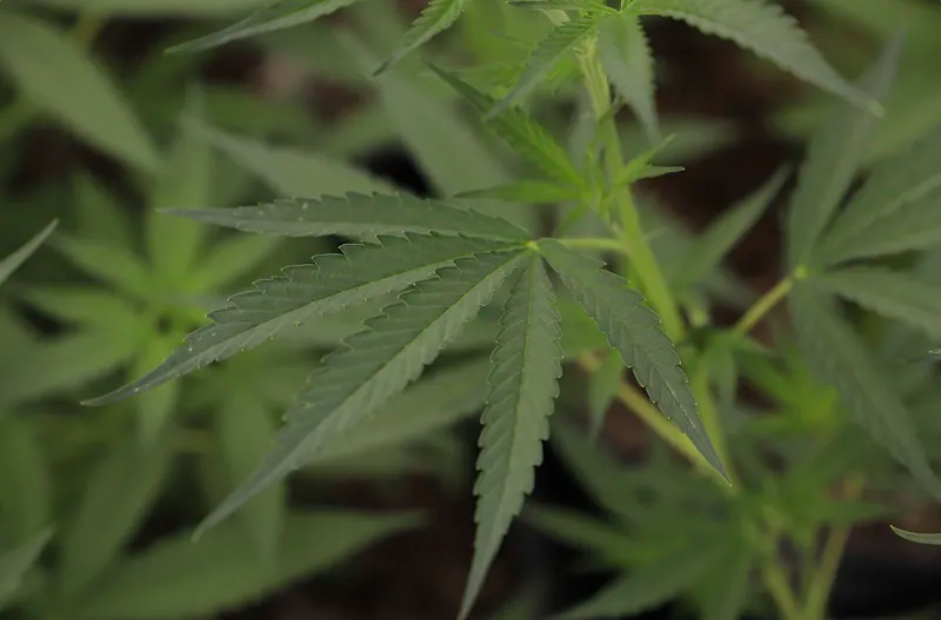
Cannabis products have evolved significantly as the industry has developed more standardized production methods and packaging systems. Among the familiar products in regulated cannabis markets, pre rolled joints stand out for their ready-made format and straightforward presentation. But have you ever wondered what happens before a pre-roll reaches a retail shelf?
The journey involves much more than placing cannabis flower inside rolling paper. Depending on the product, commercial production can include raw-material inspection, preparation, filling, finishing, quality checks, laboratory testing, and compliant packaging.
Understanding these stages provides valuable insight into cannabis manufacturing and explains why consistency, traceability, and quality assurance are important throughout the process.
Cannabis pre-rolls are prepared joints containing cannabis flower or other permitted plant material wrapped in suitable rolling paper. They are generally packaged as individual units or in multipacks.
Some products contain only cannabis flower, while infused varieties may include concentrates or other additional ingredients. These differences influence the manufacturing process, labeling requirements, and testing considerations.
In regulated markets, production methods and responsibilities depend on the product category and applicable laws. California, for example, requires licensed cannabis manufacturers to follow good manufacturing practices designed to support product consistency, accurate labeling, and contamination prevention. <Cite refs={[“turn744009search0″,”turn744009search2”]}/>
The production journey begins with the raw material. Before cannabis flower is used in a pre-roll, producers need to establish that the material meets their specifications and applicable regulatory requirements.
Quality teams may review factors such as:
The purpose of this stage is to identify potential problems before the material moves further into production.
Appearance alone cannot establish whether cannabis is free from harmful contaminants. Laboratory testing and appropriate quality-control procedures provide additional information that visual inspection cannot supply.
Once the incoming material has been accepted, it may undergo preparation appropriate to the intended product.
For conventional flower-only pre-rolls, this can involve separating unsuitable plant material and preparing the flower for the manufacturer’s production system. Commercial facilities may use specialized equipment to achieve consistency across batches.
The precise preparation method varies with the product specification, equipment, and applicable production standards.
At this stage, documentation is important. Manufacturers need to maintain records that identify the materials used and demonstrate that established procedures have been followed. Written protocols help reduce the risk of unintended ingredients, inconsistent batches, and labeling errors. <Cite refs={[“turn744009search4″,”turn744009search7”]}/>
Cannabis flower may need to be processed into a more uniform material before it can be used in a conventional pre-roll.
Consistency matters because substantial variation in the starting material can affect the finished product’s structure and physical characteristics. Manufacturers therefore establish product specifications and use suitable controls to monitor material quality.
However, uniform appearance does not automatically indicate superior cannabis. Grinding and preparation cannot, by themselves, establish cannabinoid potency, confirm the absence of contaminants, or guarantee a particular experience.
Those questions require appropriate product information and, where applicable, laboratory analysis.
The next stage involves placing the prepared material into the rolling-paper format selected for the product.
Commercial operations may use manual, semi-automated, or automated equipment, depending on production volume and the type of pre-roll being manufactured.
The objective is to produce a finished unit that conforms to the manufacturer’s specifications. Relevant checks may consider the product’s physical integrity, consistency, and declared weight.
Manufacturing controls are particularly important when producing large quantities. A small variation repeated across many units can affect the consistency of an entire batch.
Not every pre-roll follows an identical production sequence. Product design, machinery, and regulatory requirements can all influence how this stage is managed.
After filling, pre-rolls undergo finishing steps appropriate to their design. The finished units may then be examined for visible defects before they move to subsequent quality checks.
Inspection criteria can include:
Products that fail established quality requirements may be held for further assessment or rejected, according to the manufacturer’s procedures.
Visual inspection is useful, but it has limits. A pre-roll that looks consistent can still have inaccurate cannabinoid information or contain contaminants that cannot be identified by sight.
Not all pre-rolls contain cannabis flower alone. Infused varieties may incorporate cannabis concentrates or other ingredients, depending on the formulation and the laws governing the product.
Because additional ingredients can change the finished product’s composition, infused pre-rolls require appropriate formulation controls, ingredient documentation, and product-specific quality procedures.
Manufacturers must account for the ingredients used and ensure that the finished product’s labeling accurately represents its contents. In California, product quality plans are required for different manufactured cannabis product categories, including infused pre-rolls. <Cite refs={[“turn744009search2″,”turn744009search7”]}/>
This distinction matters when comparing products. A flower-only pre-roll and an infused pre-roll should not automatically be considered equivalent simply because their packaging or physical format looks similar.
Laboratory testing is one of the most important elements of regulated cannabis production.
Depending on the applicable regulations and product category, testing may assess cannabinoid concentrations and contaminants such as pesticides, heavy metals, microbial impurities, and mycotoxins.
For example, California’s Department of Cannabis Control describes required testing for cannabis goods before sale in its regulated market. Testing laboratories issue Certificates of Analysis, commonly called COAs, documenting relevant results. <Cite refs={[“turn744009search5″,”turn744009search11”]}/>
A COA can help establish whether a particular batch meets the applicable testing criteria. Consumers and retailers should pay attention to whether the report corresponds to the product and batch being evaluated.
Testing requirements are not identical everywhere, and a passing report does not mean that smoking cannabis is harmless. Laboratory testing is one component of a wider quality-assurance system.
Once the product has passed the required quality checks, it can move into final packaging and labeling.
Packaging serves several purposes: protecting the product, identifying its contents, communicating relevant information, and supporting traceability throughout distribution.
Depending on local requirements, a cannabis pre-roll label may include:
Manufacturers and other responsible businesses must ensure that labels accurately represent the finished product. In regulated production, documentation and packaging controls help connect the final retail item with the records associated with its batch. <Cite refs={[“turn744009search0″,”turn744009search4”]}/>
Well-designed packaging is not merely a branding feature. Accurate labeling and reliable traceability are important parts of responsible product management.
The manufacturing process does not end when a pre-roll is packaged. Appropriate storage and distribution practices help maintain product integrity as finished goods move through the supply chain.
Cannabis products may be affected by unsuitable environmental conditions or poor handling. Producers and distributors therefore need procedures for managing inventory, tracking batches, and storing products according to applicable requirements.
In regulated markets, distribution records also help establish where a product has moved and which batches are involved if a quality concern arises.
Traceability supports accountability, although it does not replace the need for testing or other quality-control measures.
A finished pre-roll reflects the combined performance of multiple manufacturing stages. Strong packaging cannot compensate for poor raw materials, and a consistent appearance cannot replace accurate laboratory results.
An effective quality system brings several elements together:
| Production stage | Main quality objective |
|---|---|
| Raw-material inspection | Verify source and identify potential concerns |
| Material preparation | Maintain conformity with product specifications |
| Filling and forming | Support physical consistency |
| Finishing and inspection | Identify visible defects |
| Laboratory testing | Assess specified chemical and microbiological criteria |
| Packaging and labeling | Communicate accurate product information |
| Storage and distribution | Maintain traceability and product integrity |
These objectives are broadly relevant to regulated manufacturing, although exact requirements differ by jurisdiction and product type.
Understanding how pre-rolls are produced can help consumers interpret product information more carefully.
When evaluating a product in a jurisdiction where cannabis sales are legal, consider its source, the reliability of its labeling, and the availability of relevant testing information. Check the applicable licensing and regulatory requirements rather than relying exclusively on branding or appearance.
It is also important to recognize the health risks associated with cannabis. Smoking exposes the lungs to combustion products, while THC can impair attention, coordination, and judgment. Higher-potency products may increase the risk of unwanted effects.
Consumers should follow local laws, keep cannabis away from children and pets, and never drive while impaired. No manufacturing process makes smoked cannabis risk-free.
From raw flower to finished packaging, cannabis pre-roll production involves a series of connected stages designed to support consistency, traceability, and accurate product information. Material inspection, preparation, filling, finishing, laboratory testing, and packaging each contribute to the quality-control process.
For more information about cannabis products and terminology, visit Weed Wonderland and explore its cannabis-related resources.